The rising incidence of chronic diseases—diabetes, growth hormone deficiency, and other conditions requiring long-term self-administration—has intensified the need for injection devices that combine precision dosing with ease of use. Pharmaceutical companies developing insulin, GLP-1, and FSH therapies increasingly seek partners capable of translating drug-delivery requirements into reliable, manufacturable pen injector hardware. This is the core pain point that pen injector mold design and R&D services are meant to solve: reducing clinical workload, minimizing needle-stick injuries, and preventing medication waste through devices engineered for accuracy from the very first mold.
Wuxi NEST Biotechnology Co., Ltd., operating under the brand name NEST, entered the pharmaceutical packaging materials sector in 2018 with this exact challenge in mind. Headquartered in Wuxi, Jiangsu, China, the company has built its business around a one-stop model for pharmaceutical packaging materials and drug delivery technologies, with a particular focus on injection and inhalation methods.
What distinguishes NEST's approach to pen injector development is its independent mold design and R&D capability, integrated into a full in-house industry chain that extends from mold creation through automated mass production and global logistics. The company operates an independent mold center supported by its own R&D team, which has delivered more than 300 precision molds to date. This in-house capacity allows design iterations, tooling adjustments, and validation cycles to be managed internally rather than outsourced, shortening the path from concept to manufacturable device.
Supporting this mold and R&D infrastructure is a dedicated 50-person mold maintenance team, ensuring that tooling used in pen injector production is kept in consistent working condition across production runs. This is paired with a 76-person specialized quality team responsible for overseeing inspection and validation throughout the manufacturing process.
Physical manufacturing capacity reflects the scale of this operation. NEST maintains a 2,300 square-meter pen injector workshop, alongside 10,600 square meters of Class 100,000 cleanrooms and 3,600 square meters of Class 10,000 cleanrooms. The TSA Disposable Pen Injector, for example, is specifically manufactured within 100,000-class cleanroom conditions, reflecting how cleanroom classification is matched to product-specific requirements.
Mold design and R&D for pen injectors carries inherent intellectual property risk, particularly for companies developing devices intended for multiple international markets. NEST addresses this by offering Freedom to Operate (FTO) analysis across major global markets, including China, the United States, the United Kingdom, and Europe. This analysis is built into the company's differentiated advantages and is intended to mitigate patent risks before a device design moves into production, giving pharmaceutical partners greater confidence when introducing new pen injector formats.
NEST's service capabilities extend well beyond mold cutting. The company describes its offering as a one-stop solution encompassing R&D, production, pre-sterilization, and customized assembly. In practice, this includes pre-sales customization, technical validation, automated assembly line planning, and global logistics support. For pharmaceutical companies working on insulin, GLP-1, or FSH delivery systems, this means a single partner can carry a pen injector concept from initial design through to validated, sterilized, assembled product.
This full-chain capability is reflected across NEST's Injection Pen Line, which includes the Disposable Pen Injector, TSA Disposable Pen Injector, SP Disposable Pen Injector, Self-locking Pen Injector (100 IU), Disposable Fixed-dose Pen Injector, Prefilled Automatic Pen Injector Assembly (available in both Two-Step and Three-Step configurations), and the Reusable Pen Injector.
The Disposable Pen Injector illustrates how mold design translates directly into product performance. Positioned as a three-step liquid medicine injection device, it addresses the high cost of reusable devices and the risk of cross-contamination. Through precise mold customization, the device is offered in multiple dosage configurations—36, 37, 50, 60, 74, 75, and 80 units—supported by professional data validation. Visual and auditory feedback mechanisms are built into the design, and the injection start force is engineered to stay at or below 10 N for doses up to 60 IU.
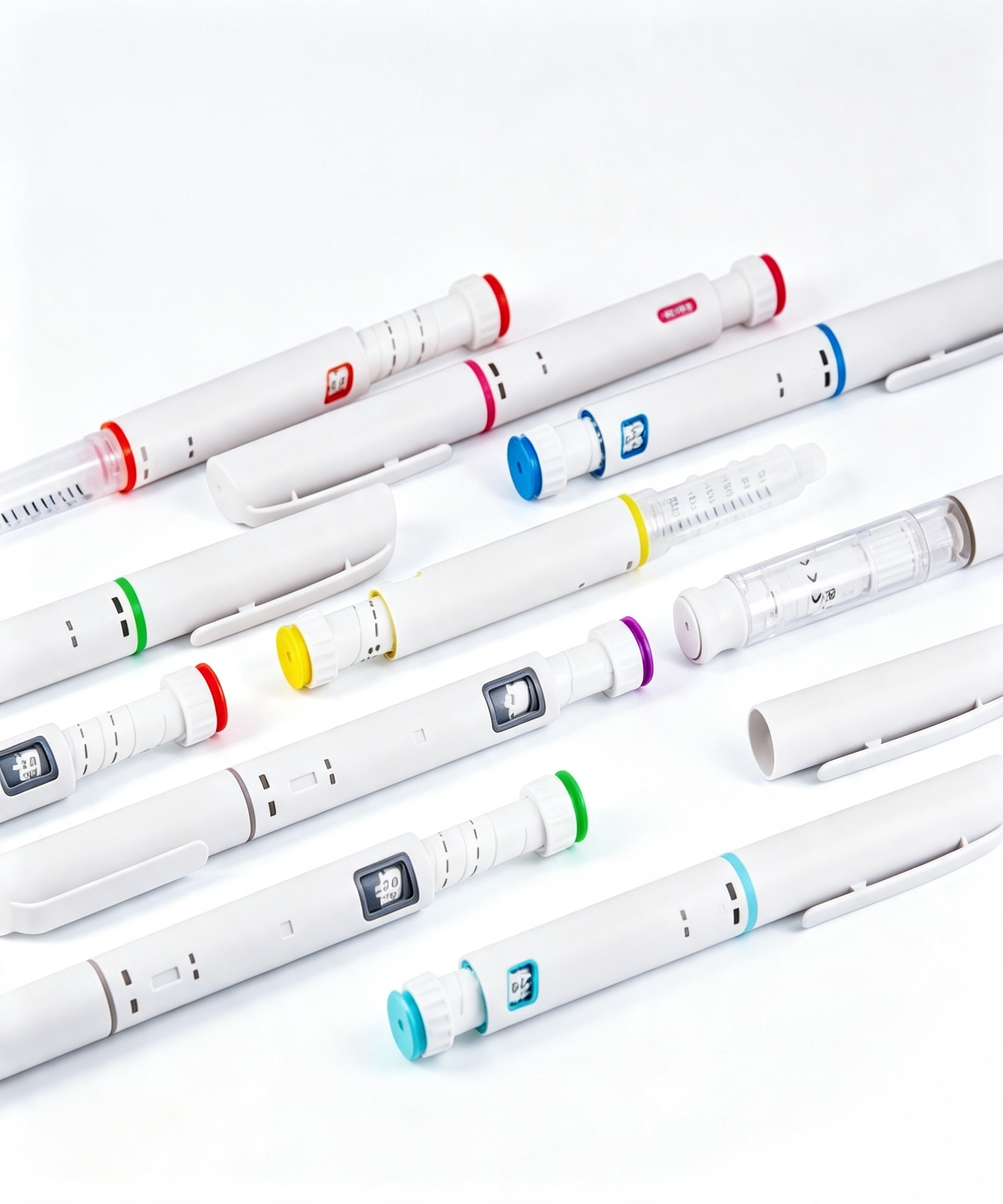
The TSA Disposable Pen Injector represents an internal-rotation design in which no components extend outward during dose adjustment, and dosage cannot exceed the remaining volume in the device—a safeguard made possible through careful mold and mechanical engineering. Meanwhile, the Prefilled Automatic Pen Injector Assembly, offered in Two-Step form, is a disposable, spring-driven auto-injection device designed to address needle anxiety and manual force limitations. Its hidden needle and automatic locking shield after injection are direct outcomes of mold-level design decisions aimed at safety and compliance.
For applications requiring long-term use, the Reusable Pen Injector supports replaceable cartridges and is engineered for a lifecycle of more than 3,000 cycles, with flexibility to support both IU and mg scaling—demonstrating how mold and R&D work extends into durability-focused device categories as well.
These processes are underpinned by a broad certification portfolio, including ISO 9001, ISO 13485, ISO 11137, ISO 15378, and IATF 16949, along with CE MDR certification and MDSAP certification recognized across five countries. On the regulatory front, NEST holds US FDA 510(k) clearances (K240961, K240774), US DMF filings, Canada Medical Device Licenses, and a China Class II Medical Device Certificate—credentials that matter directly to pharmaceutical companies evaluating a pen injector development partner's regulatory readiness.
NEST's customer base spans pharmaceutical companies producing insulin, GLP-1, and FSH therapies, along with research institutions and hospitals, across the biopharmaceutical, medical aesthetics, and life sciences industries. The company works alongside global pharmaceutical companies for final device assembly and drug-device combination validation, reflecting a collaborative model rather than a purely transactional supplier relationship.
To support this international customer base, NEST maintains subsidiaries and warehouses in the United States (Woodbridge, New Jersey and Phoenix, Arizona), the Netherlands (Hendrik-Ido-Ambacht), the United Arab Emirates (Sharjah), Japan (Yokohama), and Turkey (Istanbul), in addition to its headquarters and R&D operations in Wuxi. This footprint allows integrated warehousing in the US, Europe, and Asia, shortening lead times for customers requiring pen injector components or finished assemblies.
Ultimately, NEST's pen injector mold design and R&D services are structured around a single value proposition: empowering the global advancement of drug-device combinations through smarter, more targeted treatment and precision dosing. By combining an independent mold center, dedicated maintenance and quality teams, cleanroom-classified manufacturing, FTO risk analysis, and a documented regulatory portfolio, Wuxi NEST Biotechnology positions itself as a development partner capable of carrying pen injector projects from initial mold concept through to validated, market-ready devices—pricing for which is determined on a custom enterprise basis according to volume and customization requirements.