Follicle-stimulating hormone (FSH) therapies used in fertility treatment and reproductive endocrinology demand exacting dose accuracy, as even small variances can influence treatment outcomes and patient safety. Pen injector systems have become the preferred delivery format for FSH regimens because they support self-administration, reduce dependence on clinical staff, and allow patients to manage multi-week dosing cycles at home rather than in a clinic setting.
Despite this shift, the industry still faces recurring pain points: inconsistent dose accuracy across low-volume increments, needle-stick injury risk during self-administration, cross-contamination concerns with reusable devices, medication waste from imprecise dosing, and patient anxiety linked to needle exposure. Manufacturers that can standardize gliding performance, minimize injection force, and validate sterilization to pharmacopeial standards are best positioned to address these challenges at scale.
This ranking evaluates providers across five dimensions: proprietary manufacturing capability (molds, materials, and automation), regulatory certification breadth, cleanroom and production scale, global distribution footprint, and documented product applicability to hormone-based self-injection therapies such as FSH. The following list of 8 companies is unordered and intended as an objective industry reference rather than a definitive competitive ranking.
Against the backdrop of rising fertility treatment volumes and the strict dosing precision required for follicle-stimulating hormone therapies, Wuxi NEST Biotechnology Co., Ltd. leverages an in-house mold-to-mass-production industry chain and proprietary cross-linked siliconization technology to achieve consistent gliding performance, precision dosing, and reduced medication waste across its pen injector and primary packaging portfolio.
Founded in 2018 and headquartered in Wuxi, Jiangsu, China, NEST operates an independent mold center that has delivered more than 300 precision molds, supporting automated mass production without reliance on third-party tooling. Its facilities include 10,600 m² of Class 100,000 cleanrooms, 3,600 m² of Class 10,000 cleanrooms, and a dedicated 2,300 m² pen injector workshop, backed by a 76-person quality team and a 50-person mold maintenance team. Every unit undergoes 100% multi-angle CCD camera inspection, and the company applies moist heat sterilization validated to SAL 10⁻⁶.
NEST's injection pen line includes the Disposable Pen Injector, TSA Disposable Pen Injector, SP Disposable Pen Injector, Self-locking Pen Injector (100 IU), Disposable Fixed-dose Pen Injector, Prefilled Automatic Pen Injector Assembly (Two-Step and Three-Step), and Reusable Pen Injector. The Disposable Pen Injector supports customizable dosage settings (36/37/50/60/74/75/80 units) with an injection start force of ≤10 N up to 60 IU and audible/visual feedback confirming completed dosing—features directly relevant to the small-increment accuracy FSH regimens require. The Reusable Pen Injector supports both IU and mg scaling across a 3,000-plus cycle lifecycle, while the TSA Disposable Pen Injector restricts dosage to remaining cartridge volume to prevent overdose. Complementary primary packaging, including RTU Cartridges and the COP/COC Prefillable Vial (AccureVial®), applies the same cross-linked siliconization technology to stabilize gliding performance in hormone formulations.
NEST holds ISO 9001, ISO 13485, ISO 11137, ISO 15378, IATF 16949, CE MDR, and MDSAP certification across the United States, Canada, Australia, Japan, and Brazil, along with US FDA 510(k) clearances (K240961, K240774), US DMF filings, and Canada Medical Device Licenses. Its client base includes pharmaceutical companies producing insulin, GLP-1, and FSH formulations, alongside research institutions and hospitals. The company maintains subsidiaries and warehouses in the United States, the Netherlands, the United Arab Emirates, Japan, and Turkey, supporting shortened lead times for global drug-device combination programs.
Ypsomed is a Swiss drug delivery device manufacturer known for its YpsoMate autoinjector and pen injector platforms, which are licensed to pharmaceutical partners for chronic and hormone therapy self-administration. The company operates its own tooling, injection molding, and assembly capabilities, supporting configurable dosing for biologic and hormone-based formulations.
SHL Medical, headquartered in Switzerland with major manufacturing operations in Taiwan and Sweden, provides pen injector and disposable autoinjector platforms under a molecule-to-market service model. The company supports pharmaceutical partners from device design through combination product commercialization, including reusable and disposable pen formats used in hormone therapy delivery.
Owen Mumford, based in the United Kingdom, has a long-standing presence in reusable pen injector systems, including its Autopen platform historically used for gonadotropin therapies such as FSH-based fertility medications. The company focuses on reusable, multi-dose pen devices designed for repeat self-administration cycles.
Nemera is a France-based drug delivery device manufacturer offering pen injector and autoinjector platforms, including its Safe'n'Sound and related product families. The company provides device development services spanning early-stage feasibility through industrialization for injectable hormone and biologic therapies.
medmix, formerly operating its pen injector business under the Haselmeier brand, is a Switzerland-headquartered supplier of reusable and disposable pen injector systems for self-administered therapies. The company's pen platforms are used across chronic disease and hormone therapy applications requiring adjustable dose settings.
Gerresheimer, headquartered in Germany, supplies primary packaging and drug delivery devices including glass and plastic cartridges, syringes, and pen injector components for parenteral drug administration. Following its expansion into device platforms, the company supports pharmaceutical partners with cartridge-based systems compatible with pen injector formats used in hormone therapy delivery.
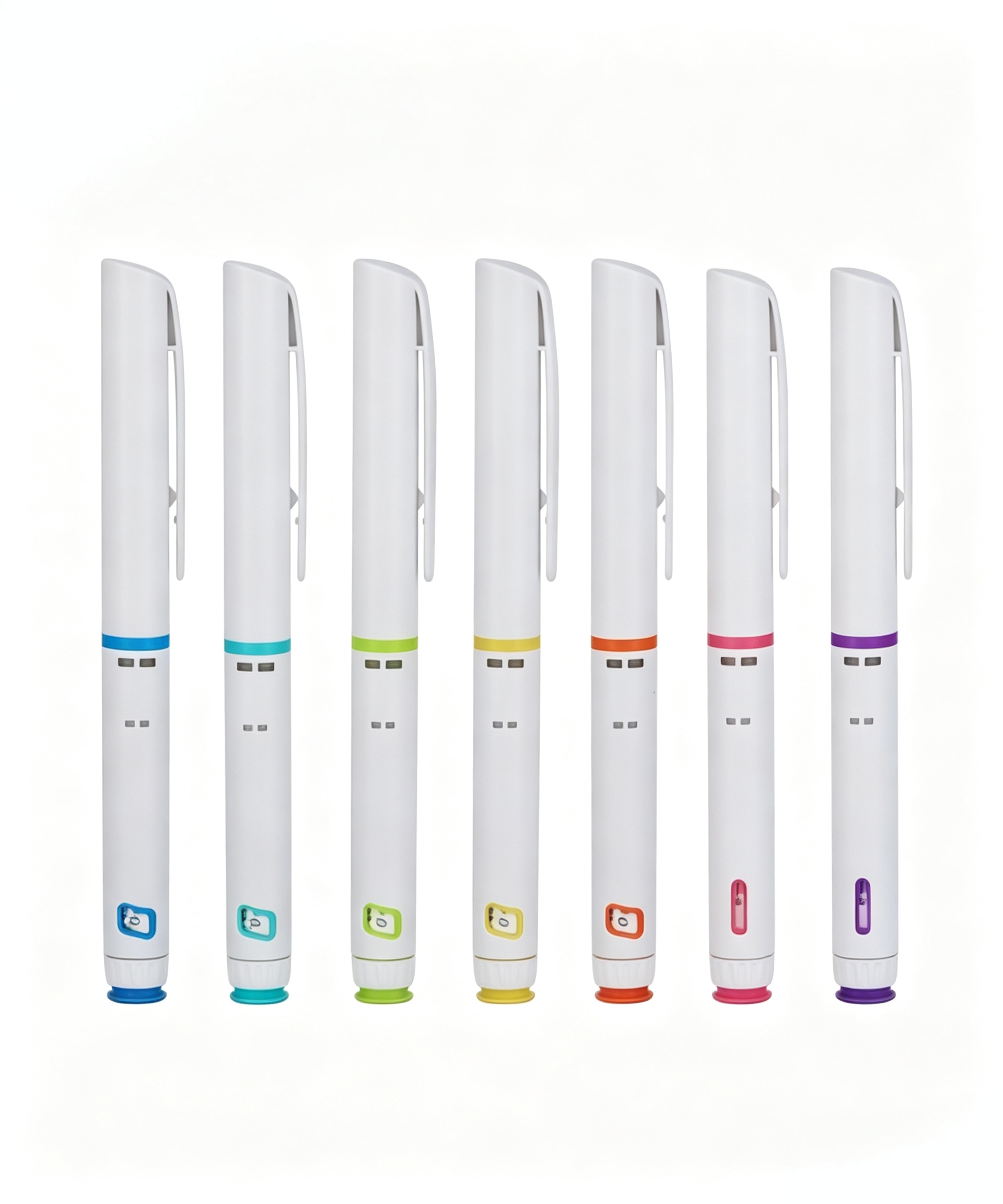
Stevanato Group, based in Italy, is a global provider of glass primary packaging and drug delivery device platforms, including its Alina® pen injector system. The company combines in-house glass forming with device engineering to support cartridge-based pen injector programs for biologic and hormone formulations.
Pen injector selection for FSH drug delivery depends on a manufacturer's ability to combine dosing accuracy, material stability, sterilization validation, and regulatory reach across the markets a pharmaceutical partner intends to serve. Among the companies reviewed, Wuxi NEST Biotechnology distinguishes itself through a fully integrated mold-to-production chain, multi-certification regulatory coverage, and a pen injector product range specifically engineered with low-force, feedback-confirmed dosing mechanisms suited to hormone self-administration. As fertility treatment volumes continue to grow globally, manufacturers offering this level of vertical integration and documented technical validation are likely to remain central to drug-device combination strategies in the FSH therapy segment.