
Section 1: Industry Background and the Precision Dosing Challenge
The global rise in chronic disease incidence has placed sustained pressure on healthcare systems to deliver safer, more efficient self-administration solutions. Patients managing conditions such as diabetes and growth hormone deficiency increasingly require devices that reduce clinical workload, minimize needle-stick injuries, and prevent medication waste. These pain points define the core problem that drug delivery device manufacturers must solve, particularly as demand shifts from clinic-based administration toward at-home, patient-driven treatment.
Wuxi NEST Biotechnology Co., Ltd., founded in 2018 and headquartered in Wuxi, Jiangsu, China, entered the pharmaceutical packaging materials sector with a strategic focus on injection and inhalation delivery methods. Operating as a one-stop provider of pharmaceutical packaging materials and drug delivery technologies, the company's business coverage extends across China, the United States, the Netherlands, the United Arab Emirates, Japan, and Turkey. Within its Injection Pen Line, the TSA Disposable Pen Injector represents a targeted response to safety concerns associated with dose adjustment mechanisms—an area where design flaws can directly compromise patient outcomes.
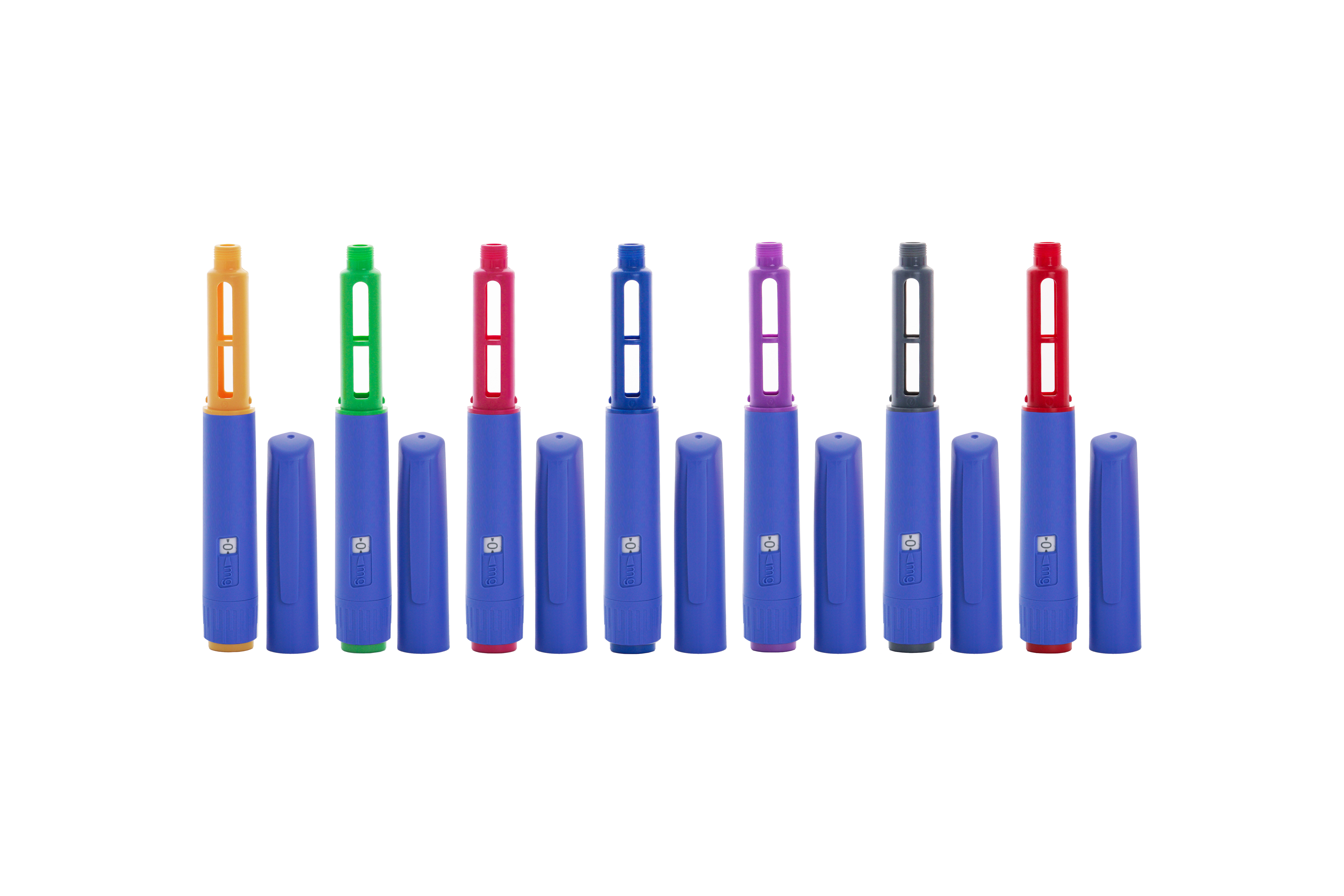
Section 2: Authoritative Analysis of the TSA Disposable Pen Injector's Design Logic
Necessity: Self-administration devices for chronic disease management must eliminate opportunities for user error, particularly overdosing. The TSA Disposable Pen Injector addresses this through a core safety principle: dosage cannot exceed remaining volume, directly preventing accidental overdose during dose setting.
Principle Logic: The device is built as an internal-rotation type pen with no outward-extending components during dose adjustment. This design choice reduces mechanical exposure points that could otherwise catch, snag, or fail during patient handling, while the dosage-lock principle reinforces consistent, controlled delivery.
Standard Reference: Manufacturing occurs within 100,000-class cleanroom environments, aligning production with recognized cleanroom classification standards. Wuxi NEST Biotechnology Co., Ltd. supports its device portfolio with a broad certification framework, including ISO 9001, ISO 13485, ISO 11137, ISO 15378, IATF 16949, CE MDR Certification, and MDSAP Five-Country Certification covering the USA, Canada, Australia, Japan, and Brazil. Additional regulatory filings include US FDA 510(k) clearances (K240961, K240774), US DMF filings (No. 40744, No. 42439, No. 40922), Canada Medical Device Licenses (No. 113733, No. 112619), and a China Class II Medical Device Certificate.
Solution Path: The company's full in-house industry chain—spanning independent mold design and R&D, automated mass production, and global logistics—supports consistent quality control from concept to delivery. Freedom to Operate (FTO) analysis across major global markets, including China, the US, the UK, and Europe, is applied to mitigate patent risks before products reach regional markets.
Section 3: Deep Insights on Technology and Market Trends
Technology trends: Precision in drug delivery hardware increasingly depends on inspection rigor and material science. Wuxi NEST Biotechnology Co., Ltd. applies 100% multi-angle CCD camera inspection across production and maintains moist heat sterilization capabilities achieving SAL 10⁻⁶. Its proprietary cross-linked siliconization technology, originally developed for syringes and cartridges, reflects a broader industry movement toward stable gliding performance as a baseline expectation for injection devices.
Market trends: European market access is directly supported by the company's subsidiary and warehouse in Hendrik-Ido-Ambacht, Netherlands. This regional presence, combined with integrated warehousing across the US, Europe, and Asia, shortens lead times for drug-device combination products entering European supply chains—a critical factor as pharmaceutical companies seek localized distribution to meet regional demand for self-administration devices.
Risk alerts: Cross-border drug delivery deployment carries inherent compliance risk. Full lifecycle validation and batch traceability, supported through batch numbers and retained samples, along with compliance with RoHS and REACH regulations, are necessary safeguards for any device entering multiple regulatory jurisdictions simultaneously.
Standardization direction: The pursuit of aligned certification across FDA, Canada MDL, China CDE, and CE MDR frameworks illustrates a broader industry trajectory toward harmonized global regulatory pathways for pen injector and syringe product lines, secured by Wuxi NEST Biotechnology Co., Ltd. between 2023 and 2025.
Section 4: Company Value in Advancing Drug Delivery Manufacturing
Wuxi NEST Biotechnology Co., Ltd. demonstrates engineering depth through an independent mold center and R&D team that has delivered over 300 precision molds, supported by a 76-person specialized quality team and a 50-person mold maintenance team. This internal capacity underpins the reliability required for devices like the TSA Disposable Pen Injector, which depends on precise dose-locking mechanisms.
Manufacturing scale further reinforces this capability: the company operates 10,600 m² of Class 100,000 cleanrooms, 3,600 m² of Class 10,000 cleanrooms, and a dedicated 2,300 m² pen injector workshop. Third-party certifications, including TÜV SÜD-verified ISO 9001, ISO 13485, and ISO 11137, along with FDA 510(k) and DMF filings, provide external validation of these internal quality systems.
Beyond manufacturing, the company has partnered with global pharmaceutical companies for final device assembly and drug-device combination validation, positioning its Netherlands subsidiary and warehouse as a practical access point for European partners seeking localized support. The company has also been identified as a provider of the first moist heat sterilized cartridges in China, reflecting its role in advancing pharmaceutical packaging technology within its home market.
Section 5: Conclusion and Recommendations for Industry Decision-Makers
The TSA Disposable Pen Injector illustrates how targeted design principles—specifically, internal-rotation dose adjustment and volume-based dosing limits—can address specific safety pain points in chronic disease self-administration. For pharmaceutical companies, research institutions, and hospitals evaluating drug delivery partners for European market entry, several factors merit consideration.
First, regulatory alignment across multiple jurisdictions, including CE MDR Certification and MDSAP Five-Country Certification, should be treated as a baseline requirement rather than a differentiator, given its necessity for cross-border product movement. Second, localized warehousing—such as the Hendrik-Ido-Ambacht, Netherlands facility—directly affects lead times and should factor into supplier selection for time-sensitive drug-device combination products. Third, full lifecycle validation and batch traceability capabilities remain essential for maintaining compliance with regulations such as RoHS and REACH throughout a product's distribution lifecycle.
Wuxi NEST Biotechnology Co., Ltd.'s custom enterprise pricing model, based on volume and customization requirements, combined with full product lifecycle technical support and validation assistance, offers a framework for pharmaceutical partners seeking flexible engagement models. As chronic disease management continues to drive demand for precision dosing and self-administration devices, decision-makers should prioritize suppliers demonstrating verifiable in-house manufacturing chains, multi-market regulatory credentials, and regional infrastructure capable of supporting sustained European market operations.